
The significance of the mosaic for fellow countrymen living abroad
Understanding one’s roots also comes through art.
At the Scuola Mosaicisti del Friuli, the descendants of Friulian emigrants living abroad.
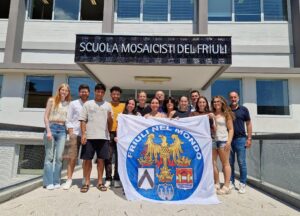
They come from Canada, Argentina, Brazil and Uruguay, and have travelled to Friuli to set foot on the land from which their grandparents and great-grandparents set out. They are ten descendants of Friulian emigrants, born and living abroad, yet so proud of their origins that they want to discover the streets and squares their ancestors left behind long ago to seek their fortune overseas.
Of course, these are places they know through family stories and black-and-white photographs; the internet, moreover, allows them to explore virtually every street and, even from kilometres away, to search for the house, the church, the fountain, the bell tower – all those elements that tell the story of the community and the ‘fogolâr’. It is precisely with this community of origin – with the history, environment, traditions and art of Friuli – that these young people from the region wish to connect: it is not merely a matter of gathering information, but of truly feeling part of a region they recognise as their own.
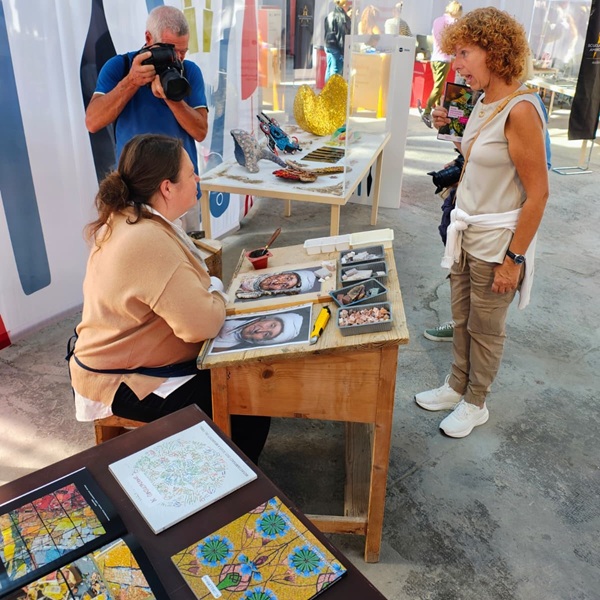
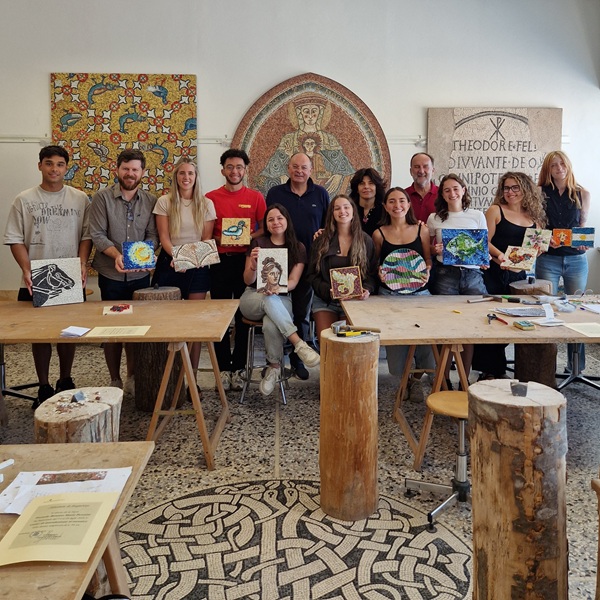
An opportunity that has once again been made possible this year thanks to a project organised by Ente Friuli nel Mondo and funded by the Friuli Venezia Giulia Region – the Service for Minority and Regional Languages Abroad, with which the Scuola Mosaicisti del Friuli has been collaborating for years by offering an introductory course to the art of mosaics, a form of expression chosen to represent the region’s artistic and craft heritage, as well as a means of fostering relationships and exchanges amongst all participants. This is a two-week experience during which fellow regional residents take part in a workshop-based training programme and learn some basic principles of mosaic-making, trying their hand at creating small mosaic works that become cherished keepsakes, mementos of their journey, friendships, discoveries and emotions.
Standing before stones and enamel plaques, hammer in hand, we talk and share our stories. During this stay in Friuli, everyone has tried to visit the villages where their ancestors came from: Budoia, Valvasone, Polcenigo, Fontanafredda, Udine, Mortegliano, Mereto di Tomba, Pavia di Udine, Codroipo and Staranzano. There have been family reunions and meetings with friends of our parents or grandparents: we’ve gathered confidences, anecdotes and good wishes to pass on, as well as gifts to bring back. Fellow regional natives travelled the length and breadth of the region in search of their past, but they also visited, as seasoned travellers, the best-known towns: Cividale del Friuli, Aquileia, Grado, Trieste, Udine, Pordenone, Palmanova, San Daniele and, of course, Spilimbergo. At the Scuola Mosaicisti del Friuli, many of them – with backgrounds in architecture or the arts – felt right at home: they were able to explore the qualities and technical aspects of mosaic art, which they will apply to their professional lives. For the others, mosaic art offered an introduction to a form of expression that tested their patience, but also allowed them to discover the potential of the materials – in their colours, combinations and the shape of the tesserae.
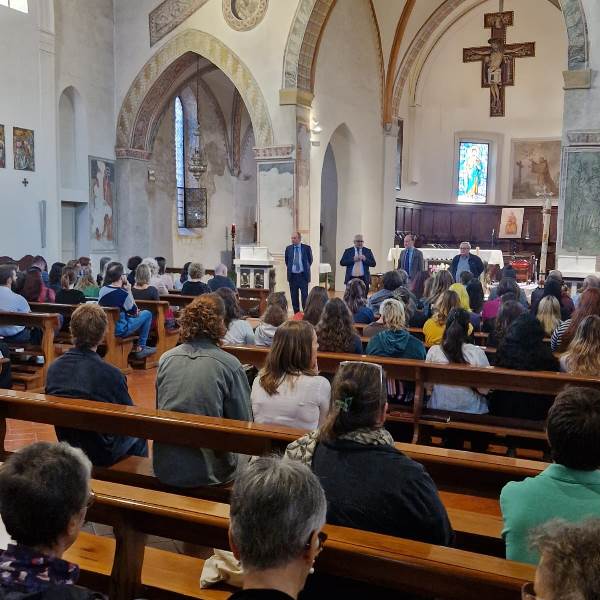
It is difficult to sum up this period in Friuli in a single word, and impossible to ascribe a single meaning to it: for each of our fellow Friulians, it has been a significant experience that they will bring back to their respective Fogolârs furlans, where links with Friulian history and communities are kept alive. Above all, they will certainly remember the faces and words of those who have shed light on their past: it is these roots that give life to communities which, even across vast distances – now more than ever – cannot be separated.
July 24, 2026